




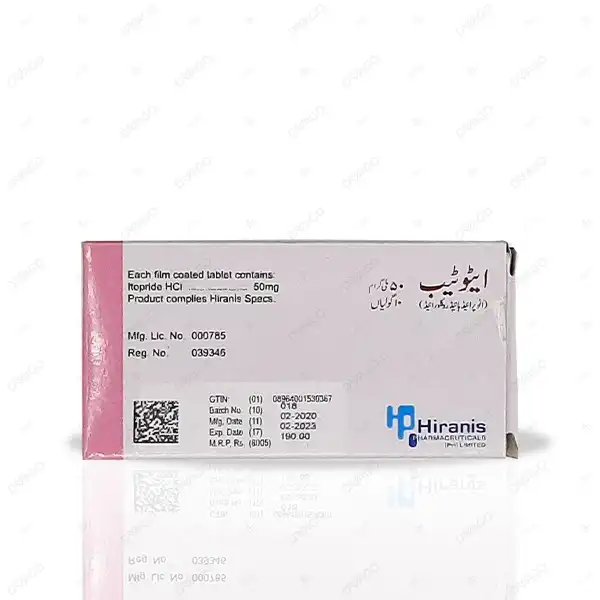
Ito Tablets 50mg
₨ 22 / per unit
Add to cart
Buy Now
Generics
Itopride Hydrochloride
Used For
Dyspepsia
How it works
It (Itopride hydrochloride) activates gastrointestinal propulsive motility due to its dopamine D2 antagonizing activity and acetylcholinesterase inhibitory activity. Itopride activates acetylcholine release and inhibits its degradation.
Usage And Safety
Dosage
Adults : The recommended dose (Itopride hydrochloride) for adult patients is 150 mg daily or one tablet (50 mg) taken orally three times a day before meals. Children : Not recommended . OR As directed by your physician .
Side Effects
Blood and lymphatic system disorders : Leukopenia and thrombocytopenia. Immune system disorders : Anaphylactoid reaction, Endocrine disorders Increased prolactin level and gynecomastia. Nervous system disorders : Dizziness, headache and tremor . Gastrointestinal disorders : Diarrhea, constipation, abdominal pain, increased saliva and nausea. Hepato-biliary disorders Jaundice. Skin and subcutaneous tissue disorders Rash, redness, and itching.
Drug Interactions
Particular caution should be taken with drugs with a narrow therapeutic index, sustained release or enteric-coated formulations. Anti-ulcer drugs like cimetidine, ranitidine, teprenone and cetraxate do not the prokinetic action of itopride, Anticholinergic drugs may reduce the action of itopride.
Indication
Itopride hydrochloride is used in the treatment of gastrointestinal symptoms of functional, nonulcer dyspepsia (chronic gastritis) i.e., sensation of bloating, early satiety, upper abdominal pain or discomfort, anorexia, heartburn, nausea and vomiting.
Related products
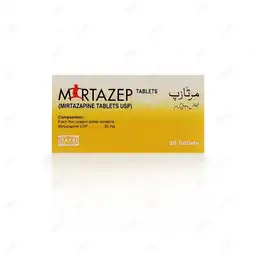
MIRTAZEP 30MG TAB
₨ 60 / per unit
FOLIC ACID 5MG TAB
₨ 92 / per unit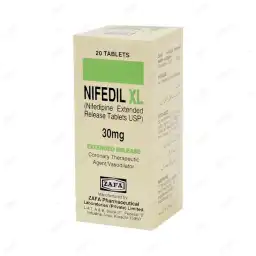
NIFEDIL XL 30MG TAB
₨ 13 / per unit