
- Your cart is empty
- Continue Shopping


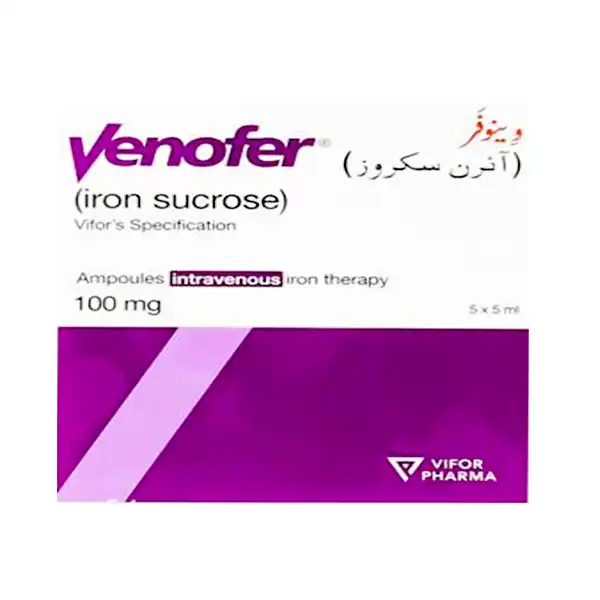
VENOFER 100MG INJ 5ML
₨ 900 / per unit
Add to cart
Buy Now
Generics
Iron sucrose
Used For
Fluids & Electrolytes
Side Effects
Common: transient taste perversions (in particular metallic taste). Uncommon: headache, dizziness, hypotension and collapse, tachycardia, palpitations, bronchospasm, dyspnea, nausea, vomiting, abdominal pain, diarrhea pruritus, urticaria, rash, exanthema, erythema, muscle cramps, myalgia, fever, shivering, flushing, chest pain and tightness. Injection site disorders such as superficial phlebitis, burning, swelling. Rare: paresthesia, anaphylactoid reactions (rarely involving arthralgia), peripheral edema
Drug Interactions
As with all parenteral iron preparations, iron sucrose should not be administered concomitantly with oral iron preparations since the absorption of oral iron is reduced. Therefore, oral iron therapy should be started at least 5 days after the last injection of Iron Sucrose.
Indication
Iron sucrose is indicated for the treatment of iron deficiency in the following: – Where there is a clinical need to deliver iron rapidly to iron stores. – Patients who cannot tolerate oral iron therapy or who are noncompliant. – In active inflammatory bowel disease where oral iron preparations are ineffective. – Non-dialysis dependent-chronic kidney disease (NDD-CKD) patients receiving an erythropoietin. – Non-dialysis dependent-chronic kidney disease (NDD-CKD) patients not receiving an erythropoietin. – Hemodialysis dependent-chronic kidney disease (HDD-CKD) patients receiving an erythropoietin. – Peritoneal dialysis dependent-chronic kidney disease (HDD-CKD) patients receiving an erythropoietin
When not to Use
Related products
LONACORT INJ 40MG 1ML
₨ 135 / per unit
MIRTAZEP 15MG TAB
₨ 25 / per unit
ZOSARTAN K 50MG TAB
₨ 7 / per unit