


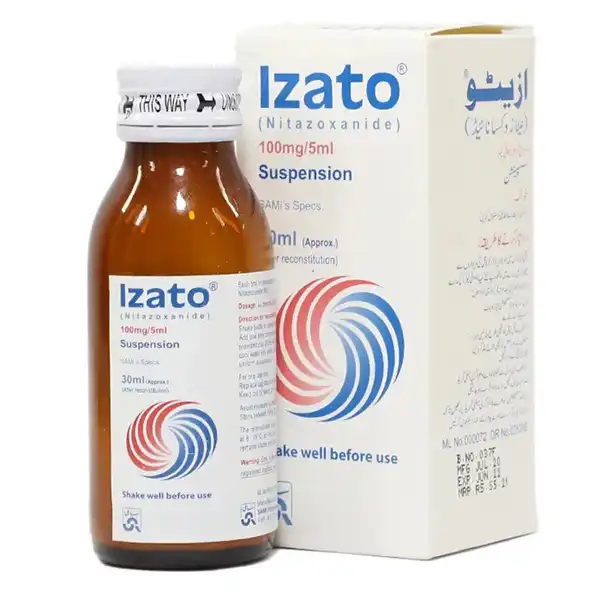
IZATO 100MG/5ML SYP 60ML
₨ 215 / per unit
Add to cart
Buy Now
Generics
Nitazoxanide
Used For
Diarrhoea
How it works
The antiprotozoal activity of nitazoxanide is believed to be due to interference with the pyruvate:ferredoxin oxidoreductase (PFOR) enzyme-dependent electron transfer reaction which is essential to anaerobic energy metabolism. Studies have shown that the PFOR enzyme from Giardia lamblia directly reduces nitazoxanide by transfer of electrons in the absence of ferredoxin. The DNA-derived PFOR protein sequence of Cryptosporidium parvum appears to be similar to that of Giardia lamblia. Interference with the PFOR enzyme-dependent electron transfer reaction may not be the only pathway by which nitazoxanide exhibits antiprotozoal activity.
Usage And Safety
Dosage
Adults : 500mg every 12hr with food for 3 days. Children : 1-3yr: 5ml (100mg) every 12hr with food for 3 days. 4-11 yr: 10ml (200mg) every 12hr with food for 3 days. Above 12yr: Same as adult dose. OR As directed by your physician.
Side Effects
Body as a Whole: Asthenia, fever, pain, allergic reaction, pelvic pain, back pain, chills, chills and fever, flu syndrome. Nervous System: dizziness, somnolence, insomnia, tremor, hypesthesia. Digestive System: vomiting, dyspepsia, anorexia, flatulence, constipation, dry mouth, thirst. Urogenital System: discolored urine, dysuria, amenorrhea, metrorrhagia, kidney pain, edema labia. Metabolic & Nutrition: Increased SGPT. Hemic & Lymphatic Systems: anemia, leukocytosis. Skin: rash, pruritus. Special Senses: eye discoloration, ear ache. Respiratory System: epistaxis, lung disease, pharyngitis. Cardiovascular System: tachycardia, syncope, hypertension. Muscular System: myalgia, leg cramps, spontaneous bone fracture.
Drug Interactions
Warfarin
Indication
It is indicated for the treatment of diarrhea caused by Giardia lamblia or Cryptosporidium parvum.
Related products
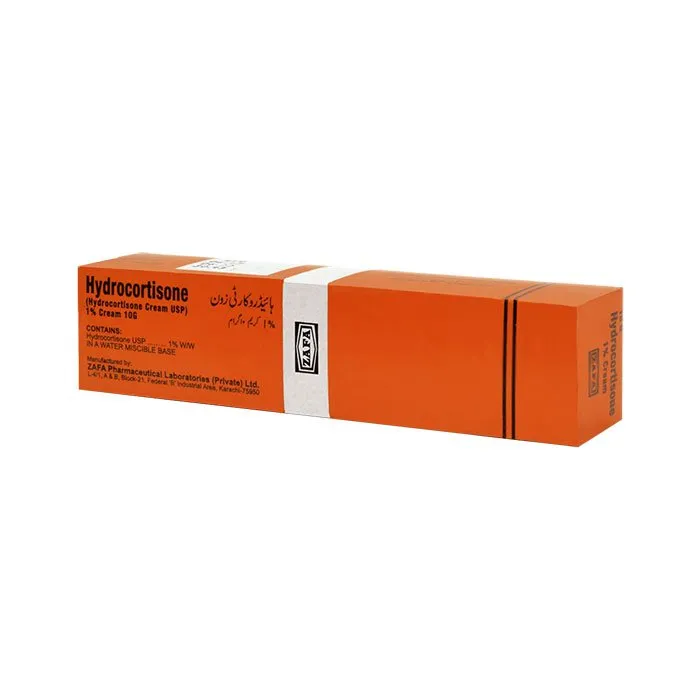
HYDROCORTISONE 1% CREAM 10GM
₨ 60 / per unit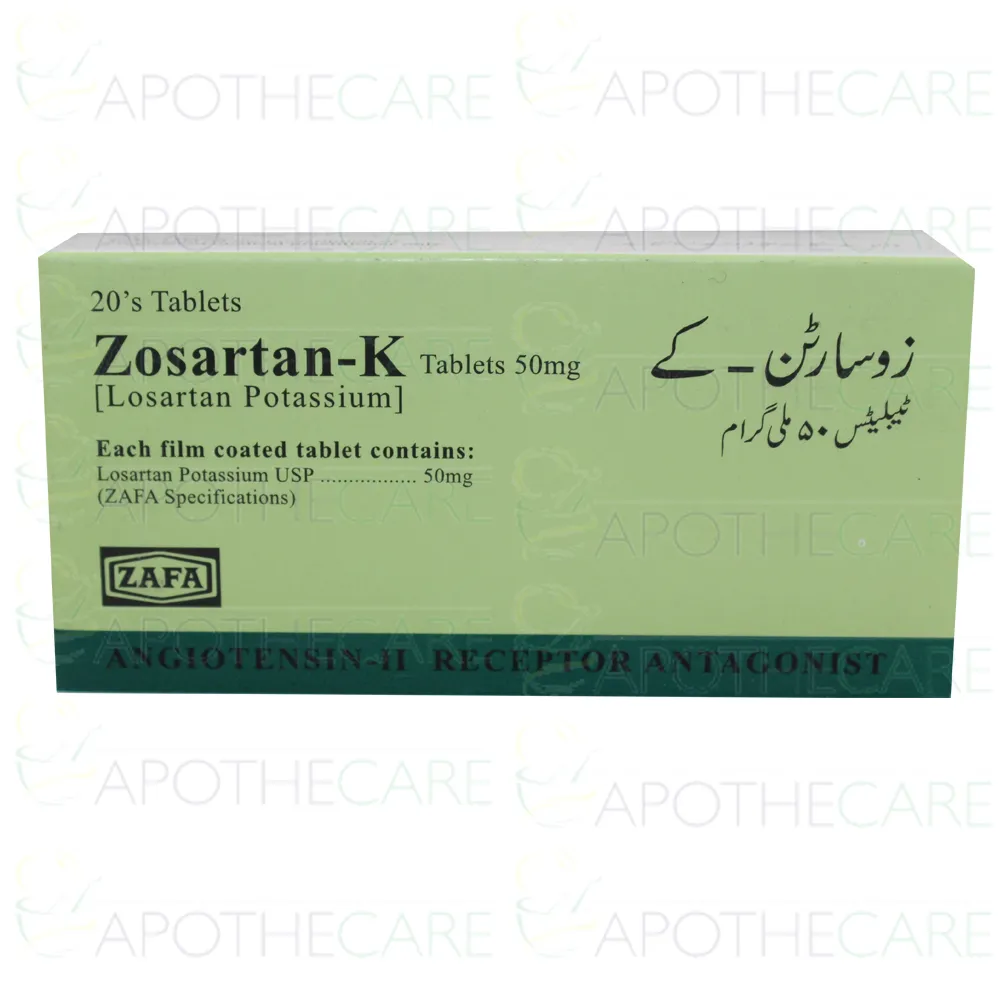
ZOSARTAN K 50MG TAB
₨ 7 / per unit
HYDRALAZINE TAB 25MG
₨ 35 / per unit